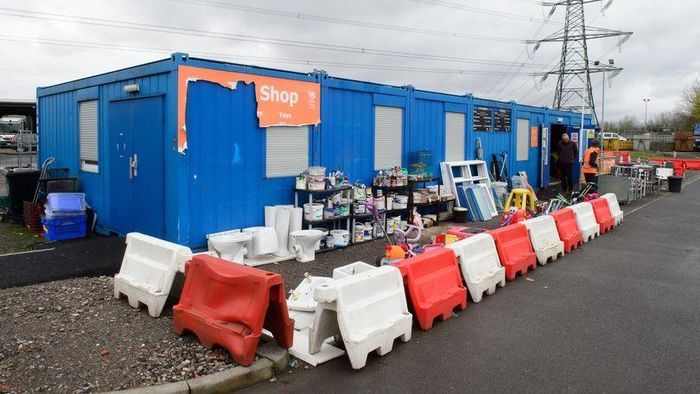
Lamby Way: More Than Just a Tip – Cardiff's Crucial Waste Hub
Cardiff, like any modern city, faces the perpetual challenge of managing its waste efficiently and sustainably. At the heart of this intricate operation lies
Lamby Way Tip, a vital facility that serves as both a Household Waste Recycling Centre (HWRC) and a proposed Waste Transfer Station (WTS). Far more than just a place to dispose of rubbish, Lamby Way represents a complex hub of logistical, environmental, and engineering challenges, crucial for keeping Cardiff clean and green. Understanding its multifaceted role, from facilitating everyday household waste disposal to navigating deep-seated geotechnical complexities, offers a fascinating insight into urban waste management.
Navigating Waste Disposal: Practical Tips for Visitors to Lamby Way
For Cardiff residents,
Lamby Way Tip is primarily known as the Household Waste Recycling Centre, a destination for everything from garden waste to old appliances. The facility strives to make the disposal process as smooth and straightforward as possible, encouraging responsible recycling and diverting as much material as possible from landfill.
One specific area where visitors often have questions is tyre disposal. The good news is that disposing of old tyres at Lamby Way is generally a very manageable process. Anecdotal evidence suggests a dedicated skip is available, easily accessible by car, often located further into the site. Staff are typically reasonable and helpful, understanding that households occasionally need to dispose of a few tyres from their vehicles or home projects. The key distinction staff are trained to look for is whether the disposal appears to be a commercial operation trying to offload trade waste for free, which is not permitted. For the average resident, taking a handful of tyres in a hatchback is usually not an issue, highlighting the centre’s commitment to facilitating legitimate household waste disposal.
To ensure your visit is efficient, consider these practical tips:
*
Pre-sort Your Waste: Arrive with your waste already separated into categories (e.g., garden waste, plastics, metals, wood, general waste). This speeds up your disposal time and helps the centre with its recycling efforts.
*
Check Accepted Items: Before you leave home, consult Cardiff Council's website for an up-to-date list of accepted materials and any items that may require special handling or have quantity limits.
*
Understand Appointment Systems: While not always mandatory for all waste types, some controlled waste streams or busy periods might require pre-booked appointments. Confirm this beforehand to avoid disappointment.
*
Safety First: Follow all on-site signage and instructions from staff. Wear appropriate footwear and gloves if handling bulky or sharp items.
*
Commercial vs. Household: Be aware that
Lamby Way Tip is for household waste only. Commercial waste requires different disposal channels and typically incurs charges. If you're unsure if your waste qualifies as commercial, it's best to check with the council.
For a deeper dive into making your visit seamless, especially concerning specific items like tyres, you might find our guide
Smooth Tyre Disposal at Lamby Way HWRC: Your Easy Guide particularly helpful. Furthermore, for a comprehensive overview of how to maximize your efficiency during any visit, explore
Efficient Waste Disposal at Lamby Way Tip for Cardiff Locals.
Beneath the Surface: Geotechnical Challenges at Lamby Way's Waste Transfer Station
Beyond its function as an HWRC, Lamby Way is the proposed site for a crucial Waste Transfer Station. This facility is designed to consolidate waste from various collection points across Cardiff, allowing it to be bulked up and transported more efficiently to final recycling or disposal sites. While essential for modern waste logistics, establishing such a station at
Lamby Way Tip comes with significant engineering and environmental hurdles, primarily due to its unique geological makeup.
Expert geoenvironmental investigations, including comprehensive desk studies and intrusive works (boreholes, soil gas, and groundwater monitoring), have revealed a complex subsurface environment. The site is underlain by "Made Ground," consisting of demolition-type materials, sitting atop thick layers of "Alluvium." These Alluvium deposits—soft clays, silts, peat, sands, and gravels—are characteristic of the Marine and Estuarine Alluvium Deposits that form Cardiff's modern coastal plain.
The presence of highly compressible Alluvium poses a substantial challenge: significant and potentially unacceptable settlements. Building heavy structures like a Waste Transfer Station on such unstable ground would lead to structural instability over time without specialised foundation solutions. To counteract this, piled foundations are absolutely necessary. Geotechnical engineers have worked closely with the Environment Agency, agreeing that driven piles are a suitable solution, following a meticulous Foundation Works Risk Assessment. This collaborative approach not only ensures safety and stability but also resulted in significant cost savings for the foundation works, demonstrating how expert planning can yield both environmental and economic benefits.
Furthermore, the geoenvironmental conditions present critical safety considerations. The underlying Alluvium and nearby existing waste cells are known to generate soil gases, primarily methane and carbon dioxide, as organic matter decomposes. These gases can be hazardous, posing risks of explosion or asphyxiation if not properly managed. Continuous monitoring and a robust mitigation strategy are integral to the safe and long-term operation of any facility at Lamby Way. These challenges highlight the immense technical expertise and foresight required to develop essential public infrastructure in complex environments.
Innovating for a Sustainable Future: Lamby Way's Ongoing Evolution
The ongoing development and operation of
Lamby Way Tip underscore Cardiff's commitment to sustainable waste management. The journey from initial concept to a fully operational Waste Transfer Station is paved with engineering ingenuity, environmental diligence, and logistical planning. Overcoming the inherent geotechnical challenges, from devising appropriate foundation solutions to mitigating soil gas risks, is a testament to the collaborative efforts of multidisciplinary teams.
The successful navigation of these complex issues, often delivered on budget and ahead of schedule, ensures that Cardiff can continue to process its waste streams effectively. This not only contributes to a cleaner urban environment but also supports broader recycling and recovery targets, moving the city towards a more circular economy. As urban populations grow and waste generation increases, facilities like Lamby Way will remain pivotal in managing our environmental footprint responsibly.
In conclusion,
Lamby Way Tip is far more than a simple refuse site; it is a critical piece of Cardiff's environmental infrastructure. From providing accessible recycling services for households to serving as a strategic hub for waste transfer, its continuous operation and development are central to the city's sustainability goals. The challenges faced, particularly those deep beneath the surface, remind us of the incredible engineering and environmental expertise required to keep our modern cities functioning efficiently and responsibly.